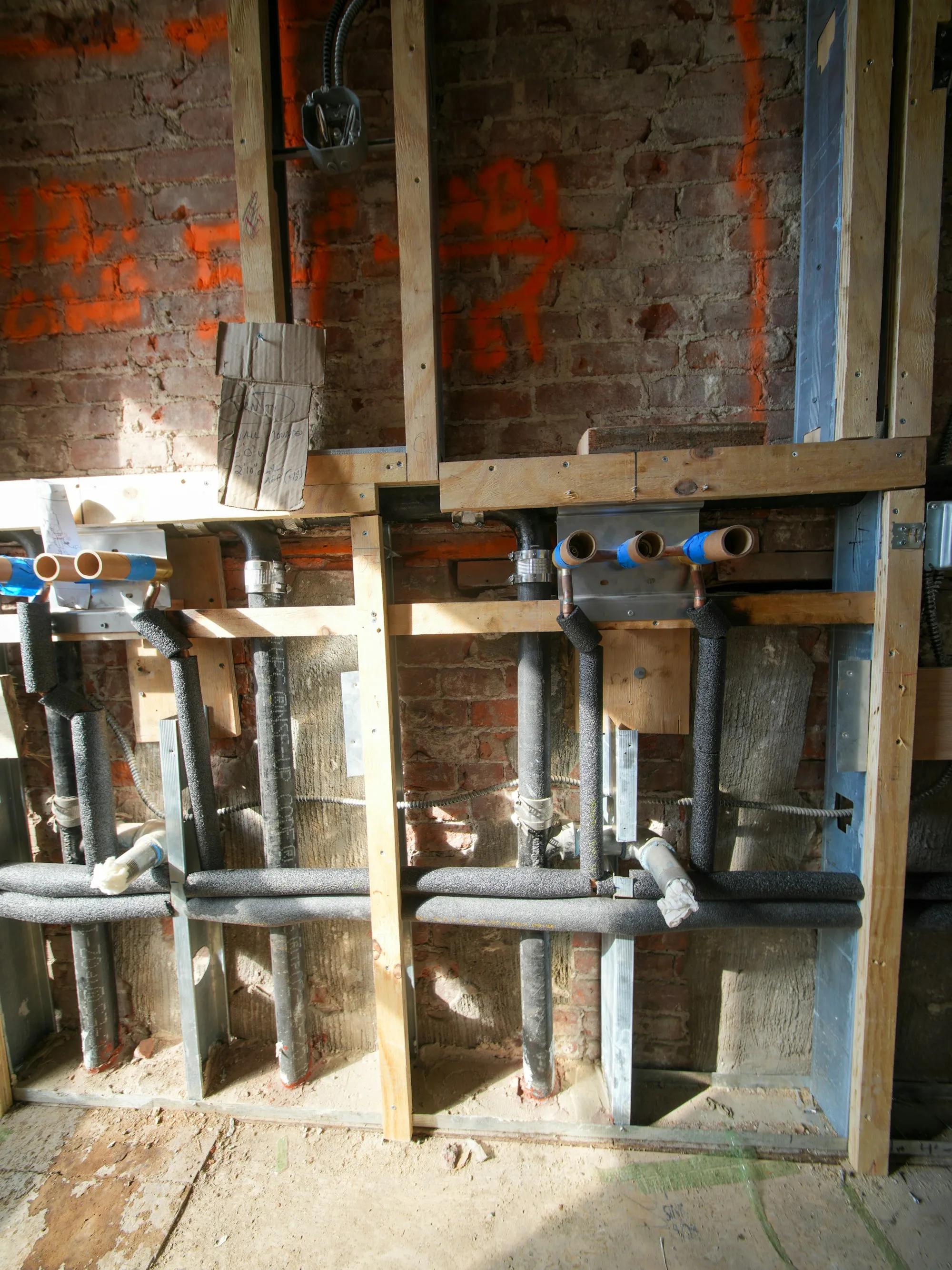
Repiping means replacing the water supply lines in a house: the pipes that carry water from the main line to every sink, shower, toilet and appliance. It is a bigger job than a leak repair, and it is usually the right call when a home has reached the point where its pipes fail faster than they can be patched.
Many Tigard homes are at that point now. The typical house here was built around 1988, and many homes near downtown date from the early 1970s. Pipe that has been in the walls for 35 to 50 years has had a long time to corrode, wear thin at the joints and collect mineral buildup. When leaks start showing up in different rooms, or the water runs brown first thing in the morning, the system is telling you something.
We repipe single runs, single floors and whole houses. Before any work starts, we look at the pipe, explain what condition it is in and go over the options with you, including whether repiping is needed at all.
Is this an emergency?
Signs your home needs repiping
One leak is a repair. A pattern is a sign the pipe itself is wearing out. These are the signs we look for:
- Pinhole leaks in more than one place, or repeat leaks on the same line
- Rusty, brown or yellow water, especially after the taps sit unused overnight
- Low water pressure across the whole house, not just one fixture
- Visible corrosion, green or white crust, or flaking on exposed pipe
- Galvanized steel pipe still in the house
- Water that tastes or smells metallic
A pipe that has already split and is pouring water is an emergency repair, not a repipe. Shut off the main valve and call us. We fix the break first and talk about repiping once the water is off.
Common causes
Why older Tigard plumbing wears out
Pipe does not last forever. How long it lasts depends on the material, the water running through it and how it was installed.
Galvanized steel
Common in older homes, galvanized pipe rusts from the inside. The buildup narrows the pipe, which lowers pressure and discolors the water, and eventually the pipe wall rusts through.
Aging copper
Copper holds up well, but after several decades it can develop pinhole leaks, especially at bends and joints where the flow is turbulent.
Mixed and patched systems
A house that has been repaired many times may have copper, galvanized and plastic pieces joined together. Every transition is another place for a leak, and joining different metals can speed up corrosion.
Water quality
Tigard gets its water from the Clackamas River through the Lake Oswego-Tigard Water Partnership. It is treated at a plant in West Linn and adjusted to be less corrosive to household pipes. That helps, but it cannot undo decades of wear in pipe that was already old.
Earlier freeze damage
A pipe that froze and was patched once is often weak on either side of the patch. Older homes with lines in crawlspaces or exterior walls collect these repairs over the years.
How we fix it
Repiping, step by step
Here is what happens from the moment you call until the water is back on.
Call now- 1
Inspect the system
We look at the exposed pipe, check pressure, ask about leak history and figure out what material you have and where it runs.
- 2
Plan the route
We work out the shortest, cleanest path for the new lines, using existing walls, ceilings and crawlspace wherever we can to keep openings small.
- 3
Explain the scope and cost factors
You hear whether we recommend a section or the whole house, what the job involves and what affects the price. Nothing starts until you agree.
- 4
Run the new pipe
We install the new supply lines, connect each fixture and keep the work area protected. On a whole-house job we plan the work so you are not left without water for longer than necessary.
- 5
Test, then close up
We pressure test the new system and check every fixture before walls are patched. Then we walk you through what we replaced.
Your options
Partial repipe or whole house?
Not every house with an old pipe needs a full repipe. Here is how we decide:
Partial repipe
Good when the problems are limited to one area, like a bathroom group, a kitchen run or the line to a water heater, and the rest of the pipe is in fair shape.
Whole-house repipe
Usually the better value when leaks are showing up in several places, the pipe is galvanized throughout, or pressure is poor in every room.
PEX
Flexible plastic pipe that can be run in long lengths with fewer joints. It needs fewer wall openings and handles freezing better than rigid pipe.
Copper
Rigid metal pipe with a long track record. Some homeowners prefer it, and it is a good choice for exposed runs.
What a repipe looks like, day to day
A repipe is planned work, not an emergency, so we can schedule it around your household. Before we start, we walk through the house with you and mark where the new lines will run and where openings will be needed. We cover floors and furniture near the work and keep dust to the rooms we are working in.
On most days the water is off only while we connect new lines to the system, and we tell you in advance when that will be. Old pipe is usually left in place inside walls and simply disconnected, which saves opening more walls than necessary. The new lines are tested under pressure before any wall is closed.
When the plumbing is done, the openings need patching. We talk through who will handle the drywall before we start, so there are no surprises at the end.
PEX and copper, in more detail
PEX is a flexible plastic pipe that comes in long coils. Because it bends around corners, a run from the water heater to a bathroom can often be made with no joints at all inside the wall, and fewer joints means fewer places to leak. PEX also tolerates freezing better than rigid pipe, which matters in garages, crawlspaces and exterior walls during a cold snap.
Copper is a rigid metal pipe that has been used in homes for generations. It holds up well to heat, looks tidy on exposed runs and is what many older Tigard homes were built with. It takes more joints and more labor to install, and it can develop pinhole leaks after many years.
Both are reliable when they are installed well. We explain what we would use in your house and why, and if you prefer one over the other, we will use it.
Repiping when you buy or sell a home
Old supply pipe often comes up during a home inspection, especially galvanized steel or a system with a history of leaks. If you are buying, ask the inspector what material the supply lines are and whether they saw corrosion or patches. If you are selling, records of a recent repipe answer that question before a buyer asks it.
We can look at the plumbing in a home you are buying or selling and tell you what condition it is in and what a repipe would involve, so you have real information for the negotiation instead of a guess.
Living at home during the work
Most people stay in the house during a repipe. Water service is interrupted for parts of each day rather than the whole job, and we plan the work so you have a working bathroom at night whenever possible.
If anyone in the house works from home, has health needs or keeps an unusual schedule, tell us before we start and we will plan the shut-offs around it.
When a repipe can wait
Not every old pipe needs replacing right away. If your home has had one leak that was clearly caused by something specific, like a nail through a line or a single frozen pipe in the garage, and the rest of the system looks sound, a spot repair and some watching may be all you need for now.
What changes the answer is a pattern: leaks in different rooms, discolored water from more than one tap, pressure that keeps dropping, or patches on patches. At that point each repair buys less time, and the money spent on repeat visits is better put toward new pipe. We tell you which side of that line your house is on.
Permits and inspections
Replacing the water supply system in a house is the kind of plumbing work that usually needs a permit and an inspection before the walls are closed. Requirements depend on the scope of the job and where the property is, and we check what applies before we start.
An inspected repipe also gives you a record of the work, which is useful when you sell the house or if an insurer ever asks about the plumbing.
Local knowledge
Repiping older homes around Tigard
Tigard grew fast in the 1970s, 80s and 90s, and that is when most of its houses went up. Near Main Street and downtown the homes are older, with a typical build year in the early 1970s. Those are the houses where we find the most worn-out supply lines and the most patched-together systems.
Ranch homes from that era often have their plumbing running through a crawlspace, which makes repiping more straightforward than in a house where every line is buried in finished walls. Two-story homes take more planning, and we look for closets, chases and the garage ceiling to route the new pipe with as little drywall work as possible.
Metzger, just north of Tigard, has a similar mix: most of its homes went up between 1970 and 1999, with some older houses from the 1930s and 40s. We see the same pipe problems there, and we repipe homes in Metzger and the other neighborhoods around Tigard as well.
Pricing
What affects the cost
The cost of repiping depends on the size of the house, how many fixtures it has, the number of floors, the pipe material and how easy it is to reach the existing lines. A single-story home with an open crawlspace is a very different job from a two-story house with finished basement ceilings.
Drywall repair after the work, and any permit and inspection the job needs, also affect the total. We walk through each of these with you before any work begins, and our plumbing cost guide covers them in more detail.
Read the plumbing cost guide
Related services
Areas we serve for repiping
Questions
Repiping FAQs
How long does a whole-house repipe take?
It depends on the size of the house and how the pipe is routed. Once we have looked at your home we can tell you how long the work will take and how long you will be without water each day.
Do you have to open a lot of walls?
We keep openings as small as we can by routing new pipe through crawlspaces, attics, closets and the garage ceiling. Some openings are usually needed to reach each fixture, and we explain where before we start.
Is PEX or copper better for repiping?
Both work well. PEX is flexible, needs fewer joints and tolerates freezing better. Copper is rigid and has a long track record. We explain the trade-offs for your house and let you choose.
Can you repipe just part of the house?
Yes. If the problems are limited to one area, a partial repipe can be the better choice. We tell you honestly when a section is enough and when the rest of the system is likely to fail soon.
Will a repipe raise my water pressure?
If low pressure comes from old galvanized pipe that has narrowed inside, new pipe usually brings pressure back up. If the cause is the supply from the street or a failing pressure regulator, we find that first, because new pipe alone will not fix it.
Do you repipe older homes near downtown Tigard?
Yes. Many homes near Main Street date from the early 1970s, and those are the houses where we most often find worn-out supply lines. We repipe homes across Tigard and the communities around it.
What happens to the old pipe?
Pipe we can reach easily is removed. Pipe buried inside finished walls is usually disconnected and left in place, which avoids opening more walls than the job needs.
My water is brown in the morning. Do I need to repipe?
Not always. Discolored water can come from old galvanized pipe, a water heater problem or a disturbance in the city main. We check where it is coming from before recommending a repipe.